
Systems of Care and Transitions Across the Rehabilitation Continuum
The Cliff Edge of Rehabilitation
Imagine spending six weeks working intensely with an acquired brain injury (ABI) client, watching them successfully master a morning routine and regain their confidence, only for them to discharge to a new setting where that exact strategy is completely dropped.
This is the frustrating reality of the current healthcare landscape: every single transition, from acute care to inpatient rehab or from an outpatient clinic back to the community, is a massive vulnerability where hard-won progress can vanish overnight. When communication fractures, the client is the one who suffers. To truly protect our clients from regression, we have to stop treating rehabilitation as a series of disconnected chapters and start operating as clinical connectors.
Quantifying the Stakes of Recovery
True neurocognitive recovery is a long game that demands consistent, integrated momentum. Research highlights that a cohesive interdisciplinary team comprising OTs, PTs, SLPs, social workers, nurses, and MDs is essential to maximize functional outcomes.
But look at the strict structural timelines required to make those outcomes last:
- Inpatient Intensity: Best practice mandates that clients receive a minimum of three hours of one-on-one therapeutic intervention per day, targeting a coordinated mix of basic and complex skills.
- Community Integration: Sustained community-based programs frequently must continue for six months or longer to achieve truly stable, long-term independence and reduce reliance on ongoing care.
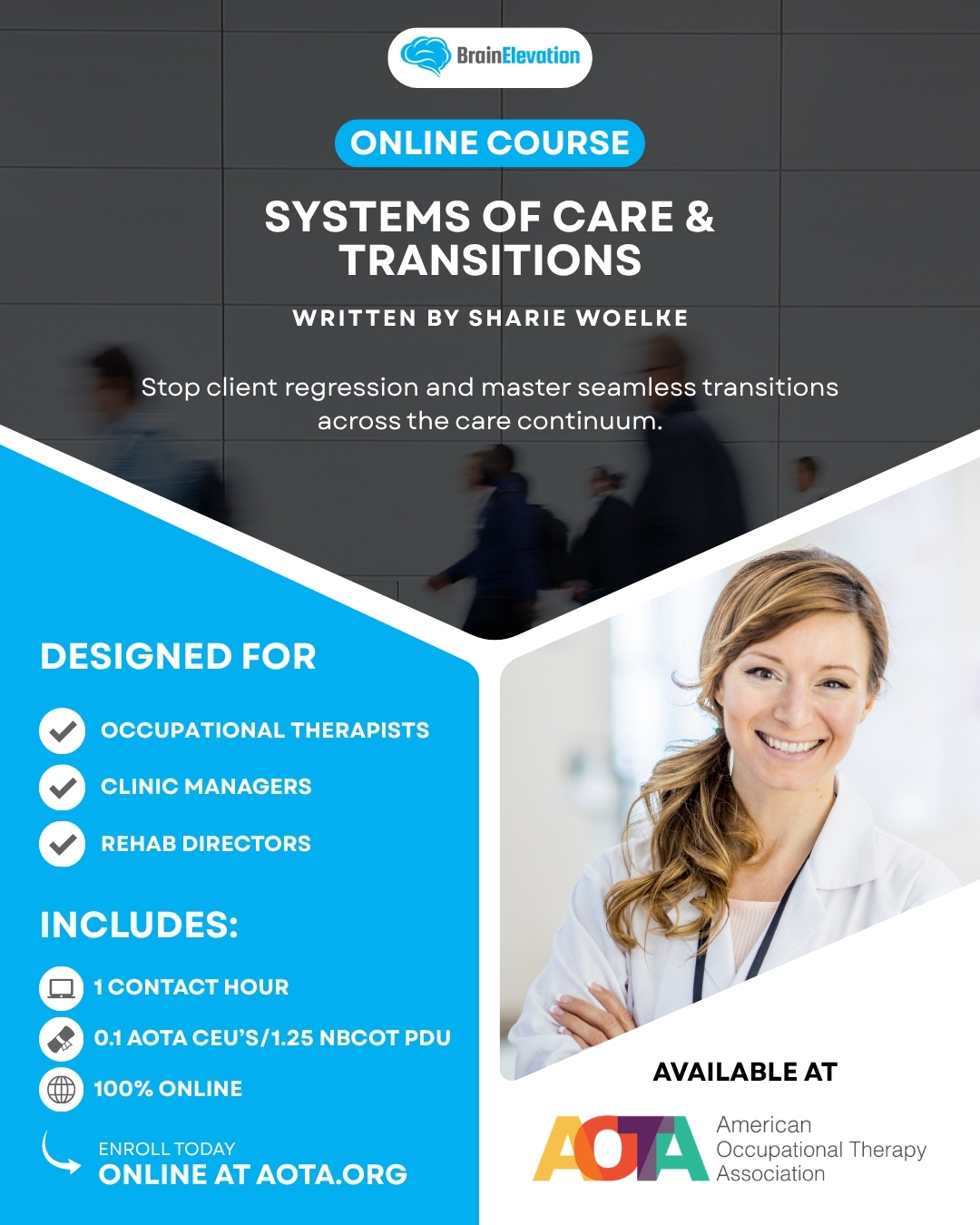
Abruptly disrupting this care cycle because of poor discharge planning directly jeopardizes a client’s trajectory. In the course Systems of Care and Transitions Across the Rehabilitation Continuum, which serves as a foundational pillar of the Professional Certificate in Applied Brain Injury Rehabilitation, we bridge this gap.
Built directly from the comprehensive curriculum detailed in systems-of-care-and-transitions-across-the-rehabilitation-continuum-e9sKHJ09.pdf, this module delivers the precise frameworks needed to manage complex healthcare shifts, empower family systems, and secure lasting real-world participation.
Core Frameworks for Seamless Transitions
1. Digital Literacy and Remote Reintegration
Discharging a client to a remote or underserved area should not mean they are left entirely without resources. In the absence of local clinics, telephone counseling and telehealth are highly effective, but only if the client can actually access them.
- The Framework: The course introduces a systematic, four-stage framework: Tech Practice → Task Checklist → Virtual Session Access → Ongoing Success.
- Clinical Execution: Instead of handing over an instruction sheet on discharge day, you will learn how to use session time to guide clients through step-by-step logging routines, schedule management, and digital troubleshooting using their own personal devices. This intentional preparation directly mitigates digital literacy barriers and builds real-world confidence before they leave your care.
2. Interactive Caregiver Support Systems
Caregivers are the ultimate anchors of long-term community survival, yet they face a profound risk of isolation, severe emotional distress, and clinical depression.
- Beyond Paper Handouts: Standard written materials are rarely enough to prepare a family for the complex behavioral or cognitive changes that happen at home.
- Evidence-Based Training: This course explores interactive learning models, such as web-based videoconferencing sessions that combine direct education with real-time problem-solving. This specific approach has been proven to drastically reduce caregiver strain, lower perceived criticism, and significantly improve family coping dynamics months after the intervention ends.
3. The Non-Linear Lifespan Re-Entry Model
True community integration extends far past basic mobility or self-care; it requires true social connectedness and the resumption of meaningful life roles. Because life is unpredictable, clients frequently require therapy “check-ins” across their entire lifespan.
- Predicting Transitions: Previously successful strategies can suddenly fail when a client encounters major life milestones, such as returning to competitive work, navigating new parenting roles, or undergoing a major geographic relocation.
- Proactive Autonomy: This module teaches you how to shift from a rigid, linear discharge mindset to a cyclical lifespan model. You will learn how to help clients co-create a personalized “trigger list” of signs, such as subtle shifts in mood, skyrocketing stress levels, or functional declines, so they can proactively re-engage with therapy for strategy reviews and environmental modifications before a major setback occurs.
A Small Strategy for Today
At your very next session, do not wait for the formal discharge date to compile your clinical notes. Instead, initiate the co-creation of a one-page handover summary directly with your client and their primary caregiver.
On this single, highly scannable sheet, outline:
- The client’s top three functional goals.
- The exact environmental cueing cards or visual checklists that proved successful in your sessions.
- Immediate safety precautions and upcoming medical appointments.
This document acts as an immediate, practical bridge that can be shared directly with post-discharge teams or posted on the client’s refrigerator at home to keep personal support workers and family members entirely aligned.
Take the Next Step in Your Practice While a one-page summary is an excellent quick patch for today, mastering a multidisciplinary continuum requires a systematic, evidence-informed approach. Inside this course, we provide the complete toolkit, including transition binders, family communication maps, and exact protocols to ensure no client falls through the healthcare cracks. Elevate your clinical authority and protect your clients’ hard-earned progress.