
Health Foundations for Participation and Recovery
The Risk of Overlooking the Basics
When a client with an acquired brain injury struggles with short term memory, brain fog, or poor attention, our natural instinct as therapists is to introduce cognitive exercises or executive function tools right away. However, if that client is only sleeping four hours a night, even the most brilliant cognitive strategy will fail to take root.
Post injury symptoms are frequently worsened by underlying lifestyle disruptions (such as poor sleep, low activity levels, and irregular routines). Before we build complex adaptive frameworks, we must first stabilize the biological foundations that allow the brain to participate in therapy and heal.
The Biological Power Supply of Rehabilitation
Brain recovery relies entirely on the body’s ability to deliver stable energy, oxygen, and restorative processes to surviving neurons. When lifestyle systems are out of sync, the brain has to exert double the effort just to manage basic metabolic survival, leaving fewer mental resources for higher level attention, planning, and emotional control. Lifestyle factors are not optional additions to rehabilitation; they are the literal power supply for recovery.
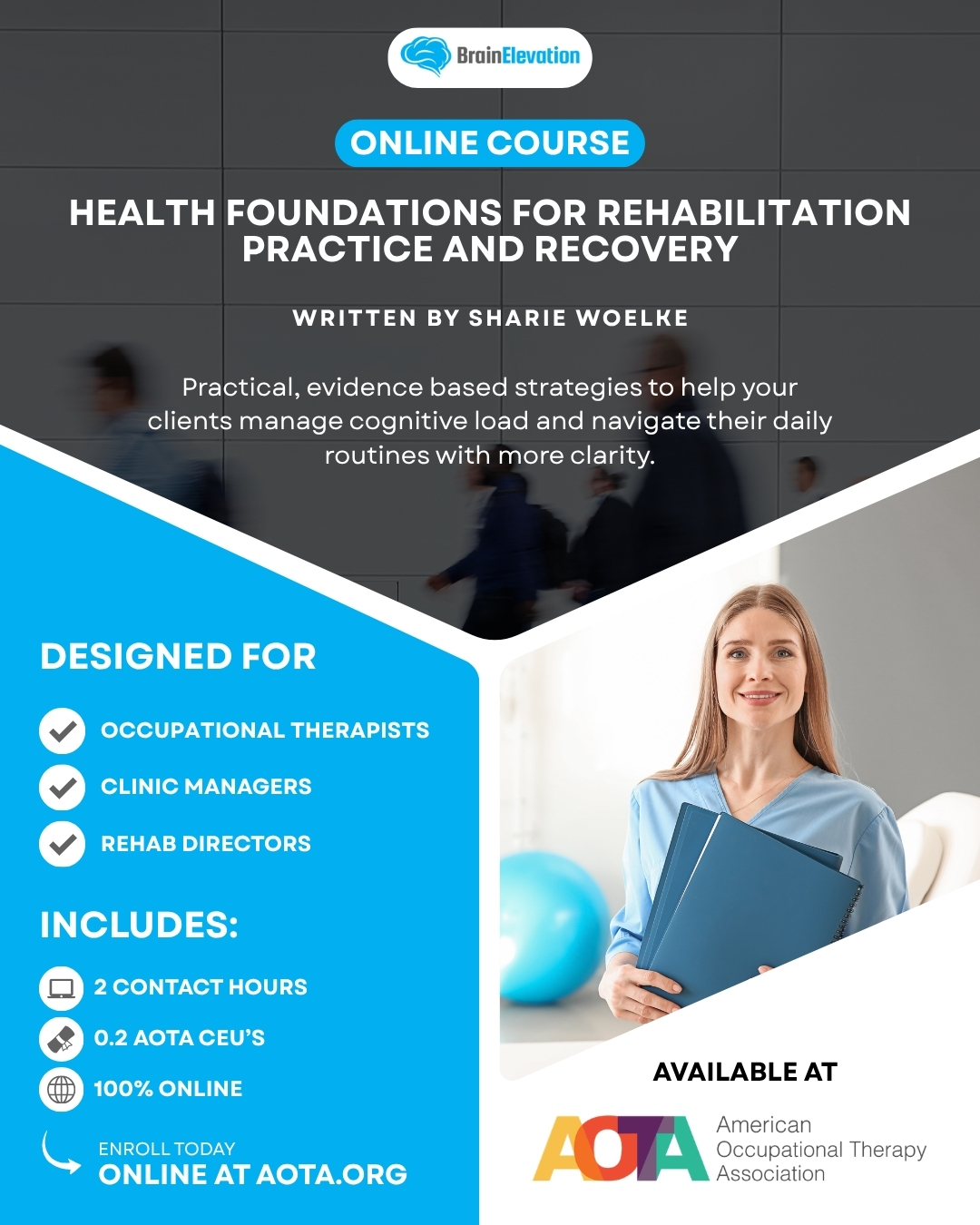
In the course Health Foundations for Participation and Recovery, we explore how to integrate five foundational lifestyle domains (sleep, nutrition, fitness, rest, and nervous system regulation) directly into standard therapy routines to improve client engagement and secure sustainable outcomes.
Up to Date Strategies for Daily Practice
1. Sleep and the Glymphatic System
Sleep disorders affect an estimated 30% to 70% of individuals living with an acquired brain injury. Deep sleep is biologically essential because it activates the glymphatic system, which acts as the brain’s waste removal mechanism to clear out harmful neurotoxins and beta-amyloids. When sleep is fragmented, this waste accumulates, leading to decreased cognitive efficiency and slower processing speeds.
- Clinical Tool: Utilizing a two week sleep diary helps clients connect their daytime choices (such as caffeine intake or pre-bed screen use) to their overall sleep quality.
- Evidence Based Strategy: Cognitive Behavioral Therapy for Insomnia (CBT-I) is highly effective, with studies showing that 73% of individuals with traumatic brain injuries experience clinically meaningful sleep improvements after using its core strategies (such as stimulus control and sleep restriction).
2. Exercise, BDNF, and Symptom Thresholds
Physical activity is a powerful, non-pharmacological tool for stimulating neuroplasticity. Aerobic exercise boosts the production of Brain Derived Neurotrophic Factor (BDNF), a growth factor protein that actively drives neural repair, strengthens synaptic connections, and increases volume in the hippocampus (the brain’s primary memory hub).
- Pacing Progress: While extended complete rest past the first few days post injury is harmful, overexertion can also delay healing. Light to moderate aerobic activity (like walking or stationary cycling) kept under 74% of a client’s predicted maximum heart rate is safe and highly therapeutic.
- Objective Frameworks: Clinicians can look to protocols like the Buffalo Concussion Treadmill Test (BCTT) to identify a client’s exact sub-symptom heart rate threshold, allowing for a structured, daily 20 minute exercise prescription that safely accelerates recovery without triggering a symptom setback.
3. Nutrition Within Scope and Autonomic Balance
What a client eats directly affects their gut brain axis, a two way communication system that influences neurotransmitter production, systemic inflammation, and everyday cognitive endurance.
- The Therapist’s Role: While therapists do not provide independent dietary advice, they operate within their scope of practice by helping clients implement nutritional structures prescribed by qualified medical professionals. This is achieved by embedding hydration cues into daily activities, utilizing organizational checklists to prevent skipped meals, and using habit stacking (such as having a high protein snack immediately following a daily walk) to build sustainable routines.
- Regulating the Nervous System: Brain injuries often leave the Autonomic Nervous System (ANS) stuck in a chronic, heightened sympathetic state (the fight or flight response), causing rapid exhaustion of the brain’s metabolic resources. Therapists can teach practical physiological techniques to restore balance, such as consciously extending the exhale during breathing exercises to directly activate the parasympathetic system (the rest and digest response) to reduce immediate anxiety and fatigue.
A Small Strategy for Today
During your next session, take five minutes to evaluate a client’s basic lifestyle baseline before starting a cognitive task. Look for a single, small habit loop you can stabilize. For instance, co-create a visual “Did you remember” checklist to anchor a daily hydration goal or a regular wind-down routine into their existing home environment.
If you are ready to transition from reactive treatment to proactive, whole person neurorehabilitation, this course is a vital foundational element of your professional path. It provides practical, routine based tools alongside professional continuing education credits to elevate your daily clinical practice.
Enroll in Health Foundations for Participation and Recovery here